Understanding Your Menstrual Cycle: Phases and Normal Ranges
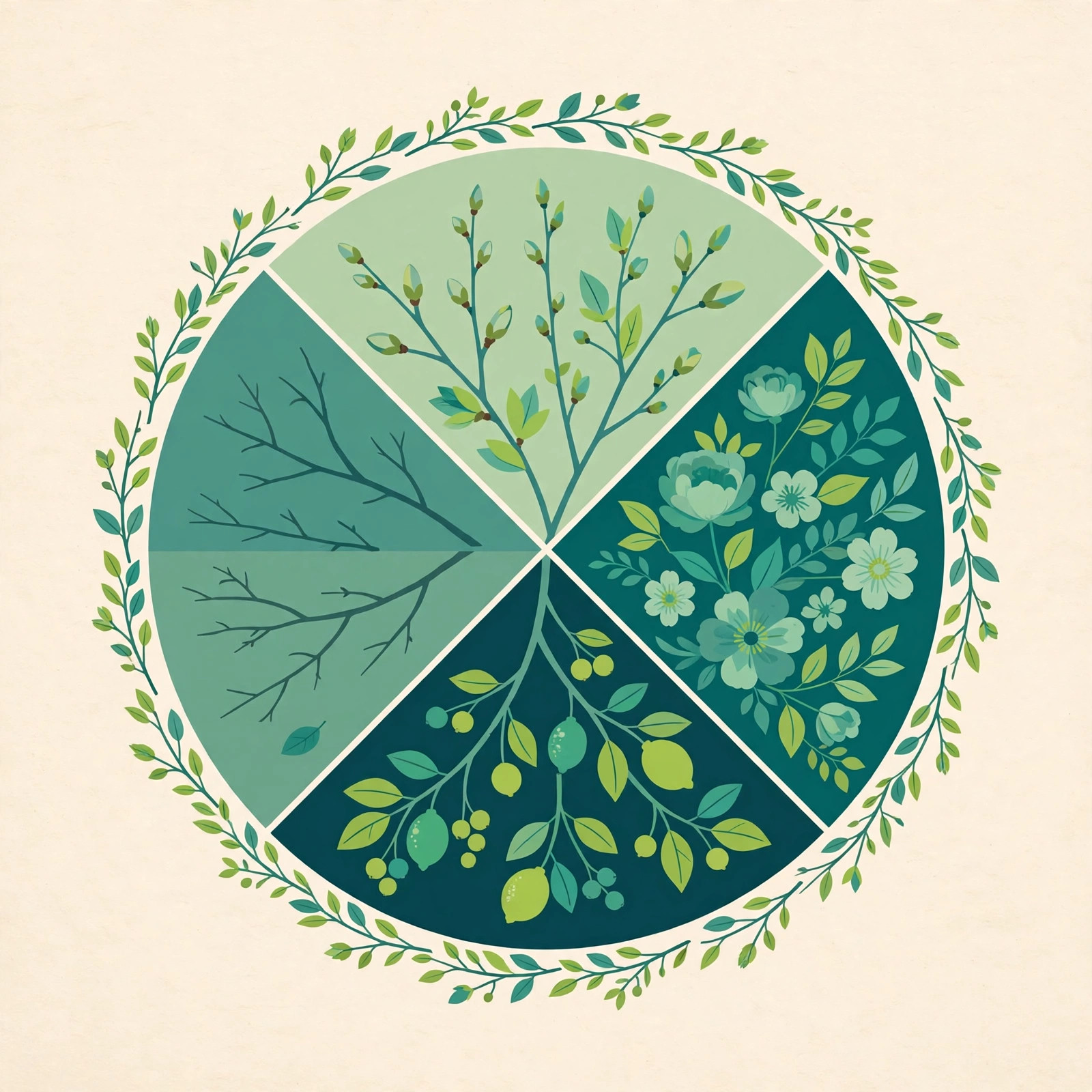
Four phases in one cycle
Day one is the first day of bleeding. In the follicular phase that follows, follicle stimulating hormone matures an egg in the ovary while oestrogen rebuilds the womb lining; this phase varies most between people and cycles, and it sets the cycle's length. Ovulation releases the egg around mid cycle. The luteal phase after it is steadier, about 12 to 14 days, as progesterone from the emptied follicle prepares the lining. If no pregnancy begins, hormone levels fall and the lining sheds: the next period, and the next day one. A full cycle is simply the distance between two day ones, counted inclusively.
What normal actually covers
The famous 28 day cycle is an average, not a standard. Cycles between about 24 and 38 days are considered normal in adults, and periods lasting up to eight days fit the healthy range too. Variation of up to about a week between your own shortest and longest cycles is common, and cycles are often irregular for the first years after they start and again approaching menopause. Stress, illness, travel across time zones, weight change and hard training all nudge the follicular phase around. A period tracker that learns your own distribution will always beat textbook dates, which is why our predictor asks for your usual length rather than assuming 28.
Changes worth reporting
Some patterns deserve a clinician rather than an app. Bleeding so heavy it soaks a pad or tampon every hour or two, periods that vanish for months without pregnancy, cycles shorter than 21 days or longer than 90, bleeding between periods or after sex, and pain that stops your life each month are all on the list. So is a sudden change in a previously regular pattern. These can signal thyroid trouble, polycystic ovary syndrome, fibroids, endometriosis or other treatable causes. Bring data: a few months of dates, durations and symptoms turns a vague worry into a diagnosable story, and it is exactly the record a simple period calculator helps you keep. The period calculator above projects your next three cycles from your own usual length, and keeping its predictions beside what actually happens is how you learn your personal pattern of variation.