Heart Rate Zones Explained: Five Gears, Five Jobs
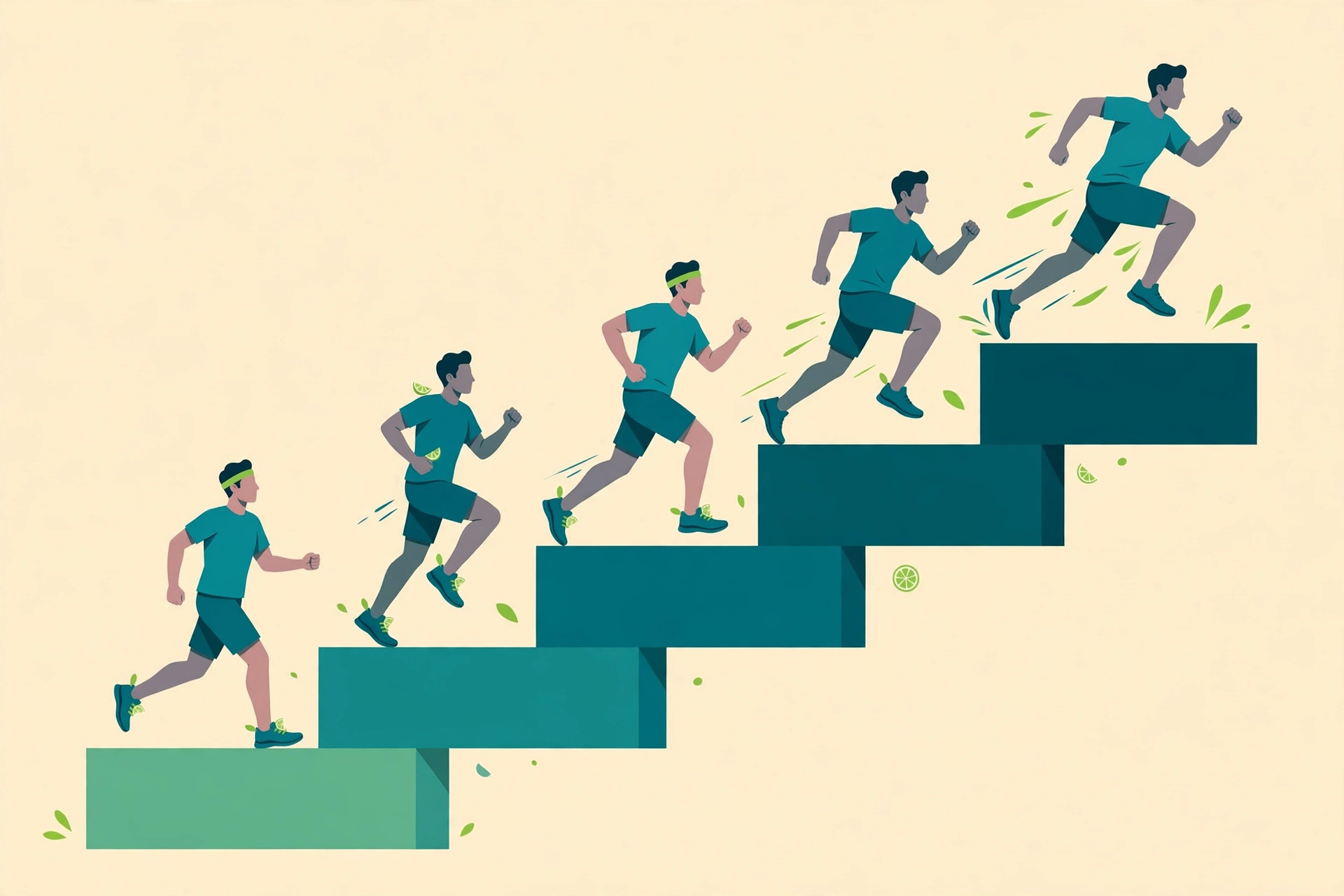
Five gears of the same engine
Heart rate zones divide effort into bands, usually percentages of maximum. Zone 1, 50 to 60 percent, is recovery pace: walking, very easy cycling, the effort of a gentle warm up. Zone 2, 60 to 70 percent, is the aerobic base: you can speak in full sentences and feel you could continue for hours. Zone 3, 70 to 80 percent, is tempo, comfortably hard, conversation in phrases. Zone 4, 80 to 90 percent, is threshold, where lactate accumulates as fast as you clear it and speech shrinks to words. Zone 5, above 90 percent, is the red zone of intervals and finishes, sustainable only in minutes.
Why easy dominates good training
Endurance adaptations, more mitochondria, better fat burning, a stronger heart stroke, are built mostly by volume at low intensity. Elite endurance athletes typically spend around eighty percent of training time in Zones 1 and 2, a pattern called polarised training, with small, deliberate doses of Zones 4 and 5. Recreational athletes often invert this, living in Zone 3, too hard to recover from daily, too easy to force adaptation, sometimes called the black hole of training. The fix is discipline at both ends: make easy days genuinely easy so hard days can be genuinely hard. Your zones are the map; honesty is the driving.
Wrist, strap and the talk test
Zones are only as good as the numbers feeding them. Wrist optical sensors lag and slip during intervals, cold and hard efforts; chest straps read the heart's electrical signal and stay accurate. Whichever you use, cross check with the talk test, which tracks physiology directly: full sentences in Zone 2, short phrases in Zone 3, single words at threshold. Heat, altitude, fatigue, caffeine and illness all raise heart rate for the same work, so a zone that feels wrong on a hot day is data, not weakness. Adjust by effort, note the conditions, and let the pattern over weeks guide you more than any single session. Once you have a maximum you trust, the heart rate zones calculator above converts it into all five bands in beats per minute, ready to programme into a watch or tape to the wall of a home gym.