Healthy Weight Gain in Pregnancy: Ranges With Reasons
Ranges keyed to your starting BMI
The Institute of Medicine guidelines, used across much of the world, set total pregnancy gain by pre pregnancy BMI. For an underweight start, below 18.5, the range is 12.5 to 18 kilograms. For the healthy band, 11.5 to 16. For overweight, 7 to 11.5. For obesity, 5 to 9. Twins carry higher ranges. The pattern surprises many: those who start lightest are advised to gain most. The ranges were fitted to the outcomes of millions of births, balancing the risks of too little gain, small babies and preterm birth, against too much, which raises large babies, caesarean rates and weight retained afterwards.
What the kilograms consist of
The baby itself is only part of the total, roughly 3 to 3.5 kilograms at term. The placenta adds about 0.7, amniotic fluid about 0.8, the grown uterus about 1, increased blood volume 1.2 to 1.5, extra fluid in tissues around 1.5, breast tissue about 0.5, and maternal fat stores typically 2.5 to 4, laid down as an energy reserve for breastfeeding. This accounting matters for expectations after birth: roughly half the gain leaves with the delivery and the weeks after, as fluid normalises. The fat reserve portion is the part that varies most between people and the part lifestyle most influences, which is why guidance targets it gently.
Steady beats perfect
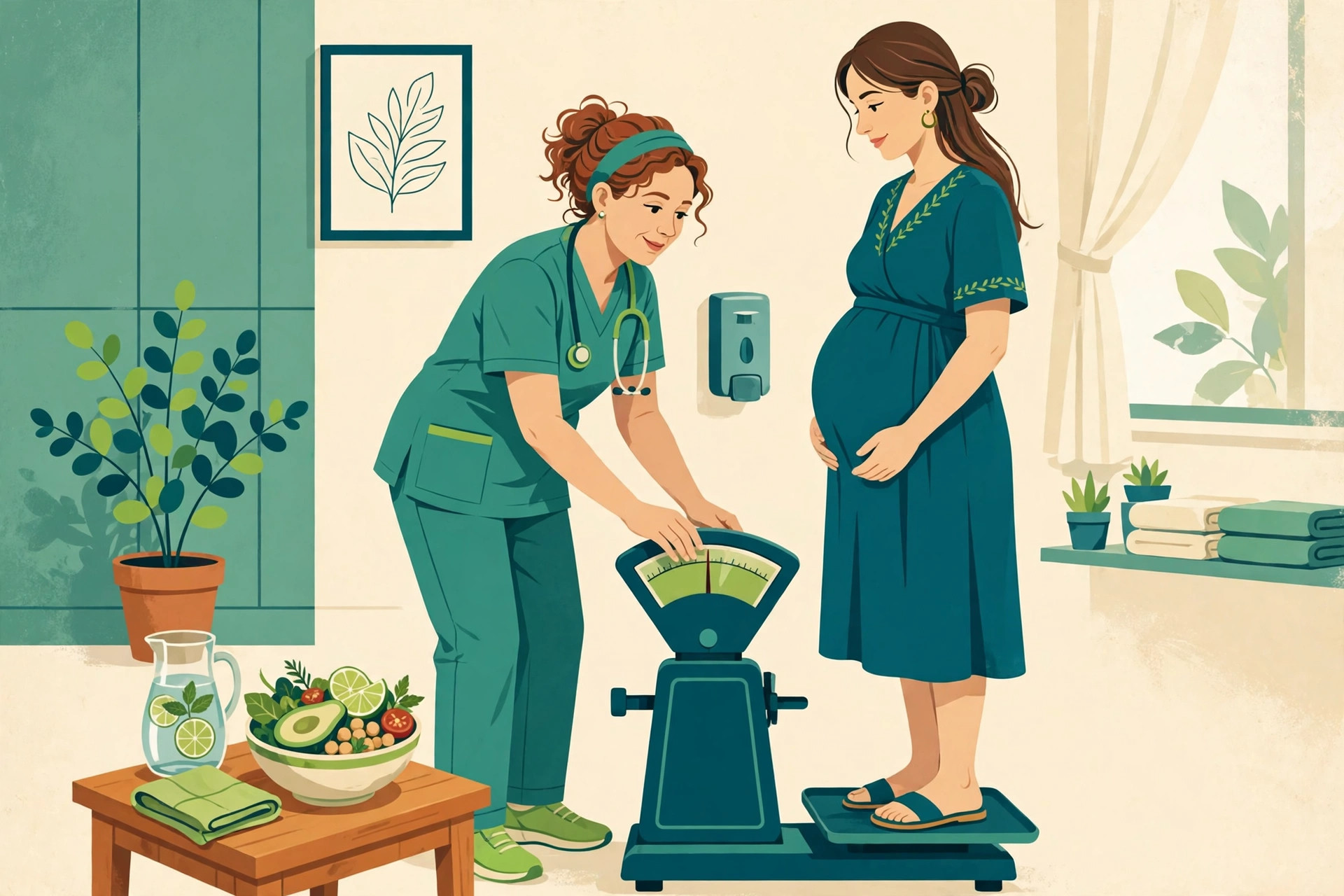
The trajectory matters more than any single weigh in: little gain in the first trimester, then roughly 0.4 kilograms a week in the healthy band through the second and third. Eating for two is a myth in energy terms; needs rise only modestly, about 200 kilocalories a day in the final trimester, while nutrient needs, folate, iron, iodine, calcium, rise much more. Weight checks belong to antenatal appointments, where the pattern is read alongside blood pressure, growth scans and urine tests. Rapid sudden gain with swelling or headache is a symptom to report the same day, not a dieting prompt. In pregnancy, always take the numbers to the midwife. These ranges are general guidance for singleton pregnancies; twins, pre existing conditions and complications all change the picture, which is why your own midwife's reading of your pattern always outranks any table.