BMI and Athletes: When Fit People Fail the Chart
The false positive problem
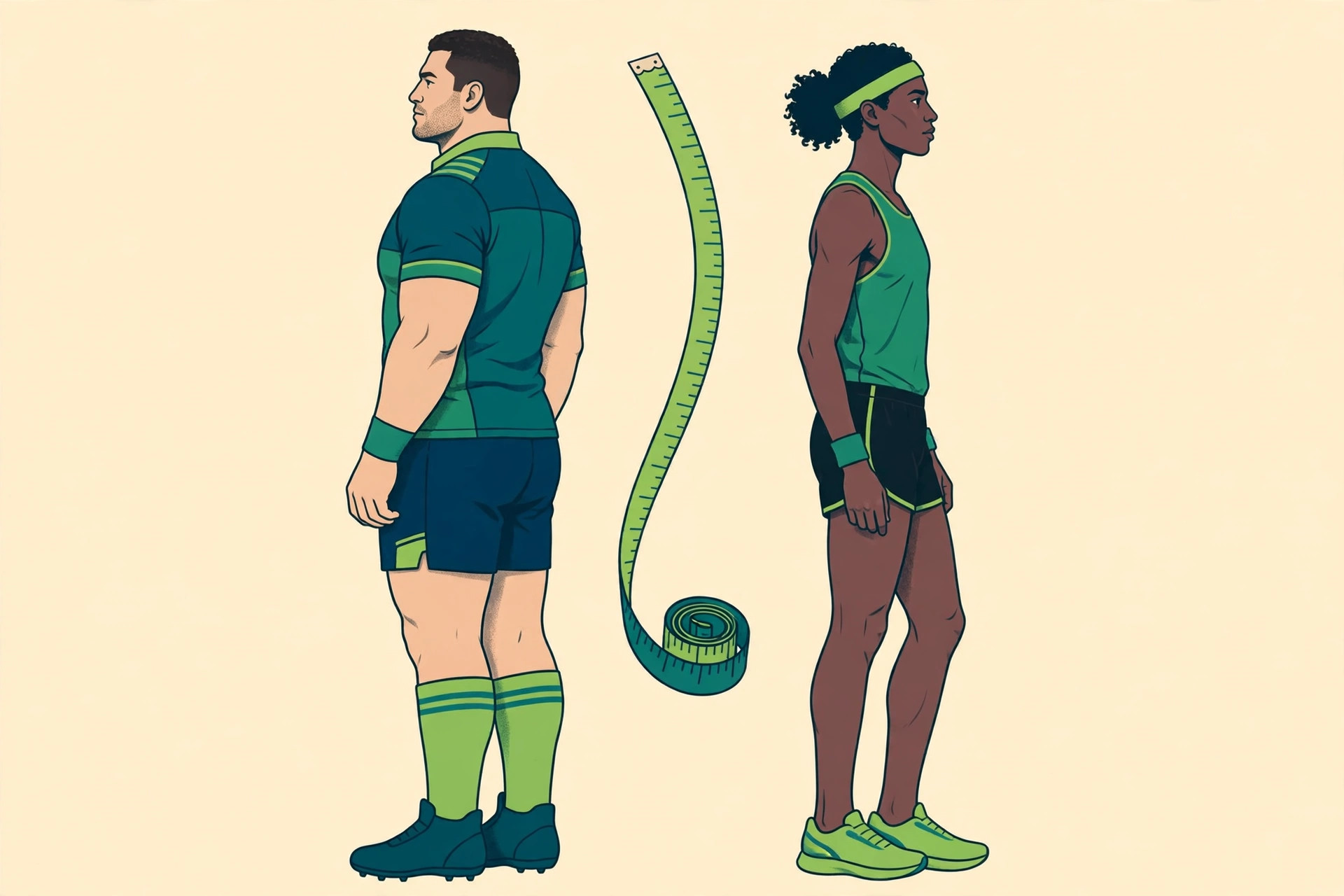
BMI misclassifies muscular people with mechanical reliability. Muscle is denser than fat, so a trained 95 kilogram athlete at 180 centimetres scores a BMI near 29, deep in overweight, while carrying twelve percent body fat. Elite rugby, American football and sprint squads average BMIs in the high 20s. Insurers, military screens and workplace health checks that use BMI alone regularly flag the fittest people in the room. The index was built on nineteenth century averages and validated on general populations; athletes are not a general population. For them the number describes the relationship between height and mass and precisely nothing about composition, fitness or health.
The false negative is worse
Less discussed is the reverse error: the person with a healthy BMI and an unhealthy body. Sedentary adults can carry high fat and little muscle at a normal weight, a profile called normal weight obesity, with metabolic risk resembling that of heavier people. Ageing produces the same pattern as muscle quietly converts to fat at a stable scale weight. This is why dismissing BMI entirely also fails. Within sedentary general populations it tracks risk well, and a rising BMI in a non athlete almost always means rising fat. The skill is knowing which population you are in before deciding what the number means, a judgement no calculator can make for you.
Better instruments for trained bodies
Athletes should grade themselves with composition and performance. Body fat percentage by calipers, DEXA or a consistent tape method, waist to height ratio, and strength and endurance benchmarks give the real picture. A waist under half your height plus good blood pressure, blood sugar and lipids outweighs any BMI objection. For teams and clinics, pairing BMI with one waist measure catches most of both error types at trivial cost. Our BMI calculator states the caveat on its own page, because tools should declare their blind spots. Yours, as an athlete, is that the index cannot see the very tissue you have worked to build. If you train seriously, use the BMI result as the start of a composition check rather than a conclusion: the body fat and waist tools on this site will give the number the context it is missing.