Blood Alcohol: How the Widmark Estimate Works, and Its Limits
A 1930s equation still on duty
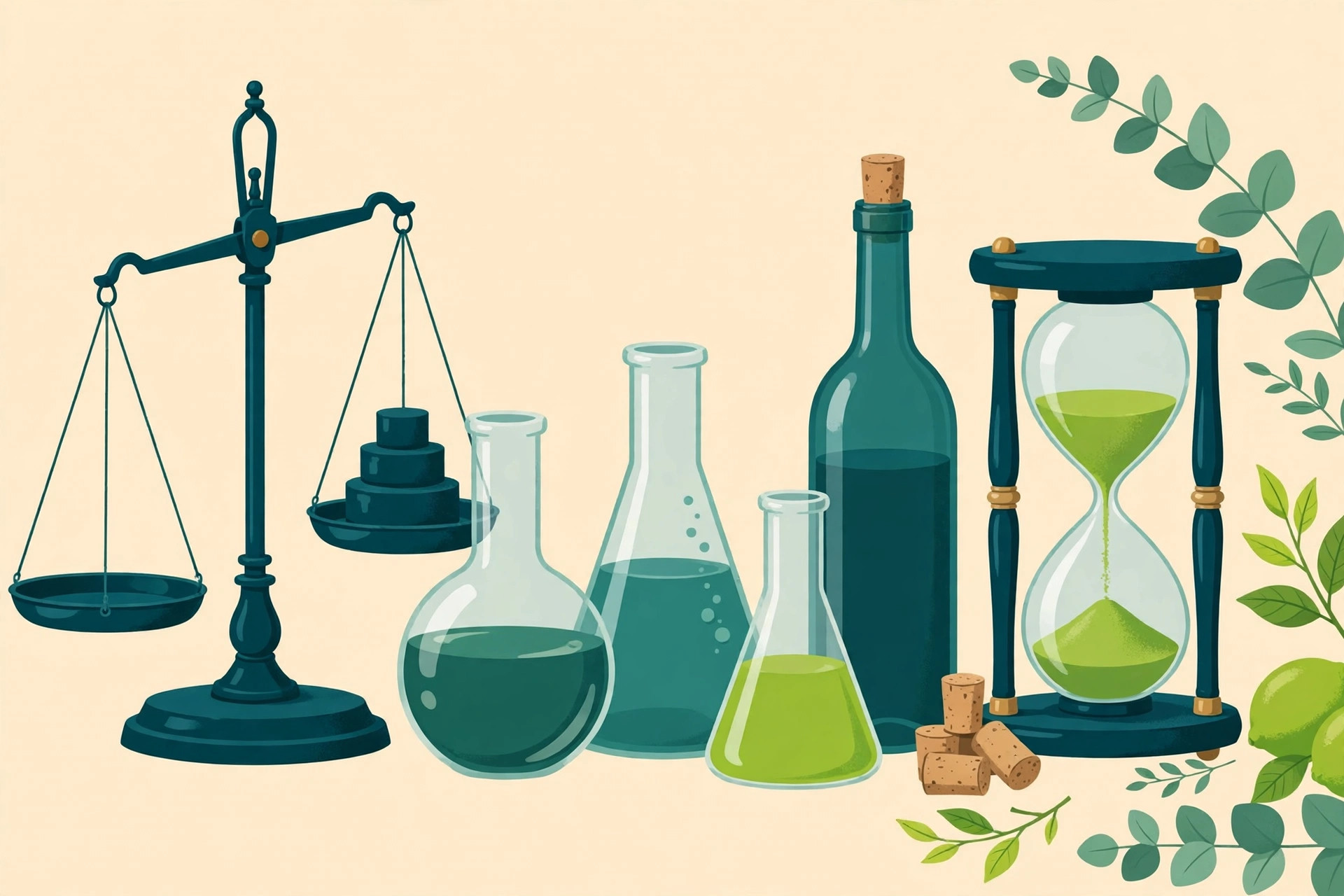
Erik Widmark, a Swedish chemist, published his method in 1932 after experiments in which volunteers drank measured alcohol and gave blood samples. His insight was that alcohol distributes itself through body water, not fat, so the blood concentration depends on how much water a body holds. The formula divides the grams of alcohol by body weight times a distribution factor, about 0.68 for men and 0.55 for women, reflecting average body water shares, then subtracts elimination at roughly 0.015 percent per hour. Police laboratories used refined versions for decades, and the same arithmetic sits inside our estimator, clearly labelled as rough.
Why your body will not match it
Every input is an average wearing your name. Distribution factors vary with body composition: a muscular and an overweight person of the same weight hold very different amounts of water. Food in the stomach slows absorption so much that peak levels can halve. Elimination rates range from 0.01 to over 0.02 percent per hour between people, and faster in heavy drinkers. Medicines, fatigue and illness change impairment without changing the number at all. Back calculation errors compound over hours. Courts treat Widmark results as ranges with expert interpretation; a website result deserves even more humility. It can sketch an evening, never certify a state.
The only safe conclusion
Here is the use this tool is for: understanding how drinks accumulate faster than the body clears them, how a second bottle of wine at dinner is still present at breakfast, and why the morning after can still be over the limit. It is not for deciding whether to drive. Impairment begins below every legal limit, reaction times suffer from the first drink, and legal limits themselves differ by country and licence. The only blood alcohol level that guarantees both safety and legality is zero, reached by not driving after drinking at all. Taxis and designated drivers are cheaper than the alternatives, in every currency that matters. If you run the estimator above, run it for understanding: watch how a long evening accumulates and how slowly the total falls. Then let the conclusion it points to, not driving at all, make the decision.